STATIC
What does it mean to be present in a world that never stops moving?
Static Project Statement
When asked what surprised The Dalai Lama the most about humanity, answered
"Man! Because he sacrifices his health in order to make money. Then he sacrifices money to recuperate his health. And then he is so anxious about the future that he does not enjoy the present; the result being that he does not live in the present or the future; he lives as if he is never going to die, and then dies having never really lived.
The world doesn’t wait. It moves fast, relentlessly, endlessly, dragging us along with it. We scroll, we consume, we reach. (take a deeeeep breath in and sigh)
There’s a familiar tension that builds just beneath my collarbone. A subtle tightness from leaning forward for too long, from holding still in all the wrong ways. My shoulders creep up without me even noticing. Until I do and then I pause.
There’s always something to react to. Some update, some distraction, some reason to stay alert. Over time, that movement seeps into the body. A low hum of restlessness. The nervous flutter of always needing to do something. It starts to feel normal. Like stillness is a threat. Like boredom is failure. Like slowing down might mean falling behind.
Breathe (inhale - exhale- sigh)
To be present in a world that never stops moving is a kind of protest. It’s a way of remembering that at the end of the day at the end of our time, our lives won’t be measured by productivity, but by presence. Not by how fast we move, but by what we’re awake to while we’re here.
Static
is what rises in the stillness
when you drop your shoulders,
you breathe a little deeper,
and remember what it feels like to be in your body again.
concept
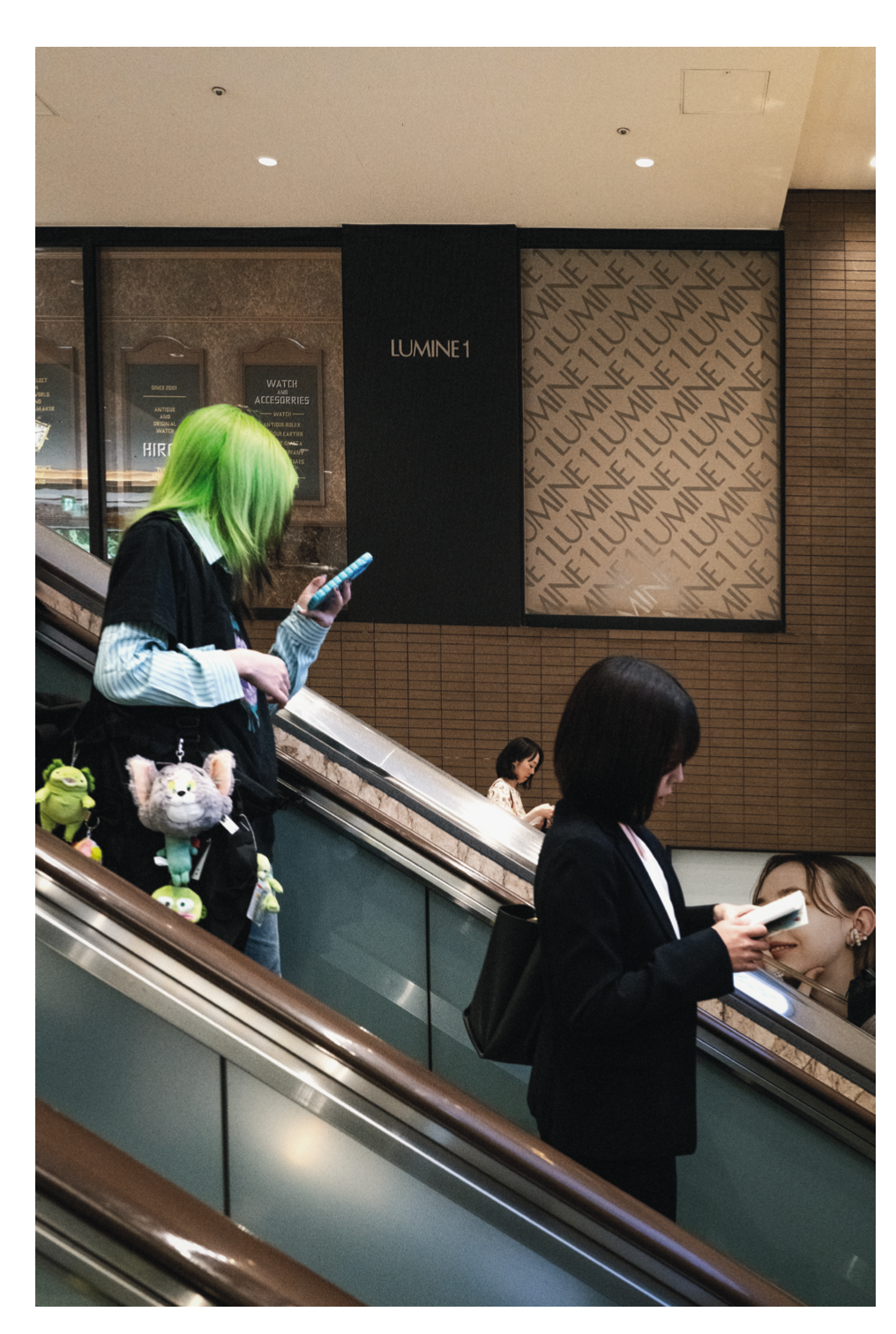
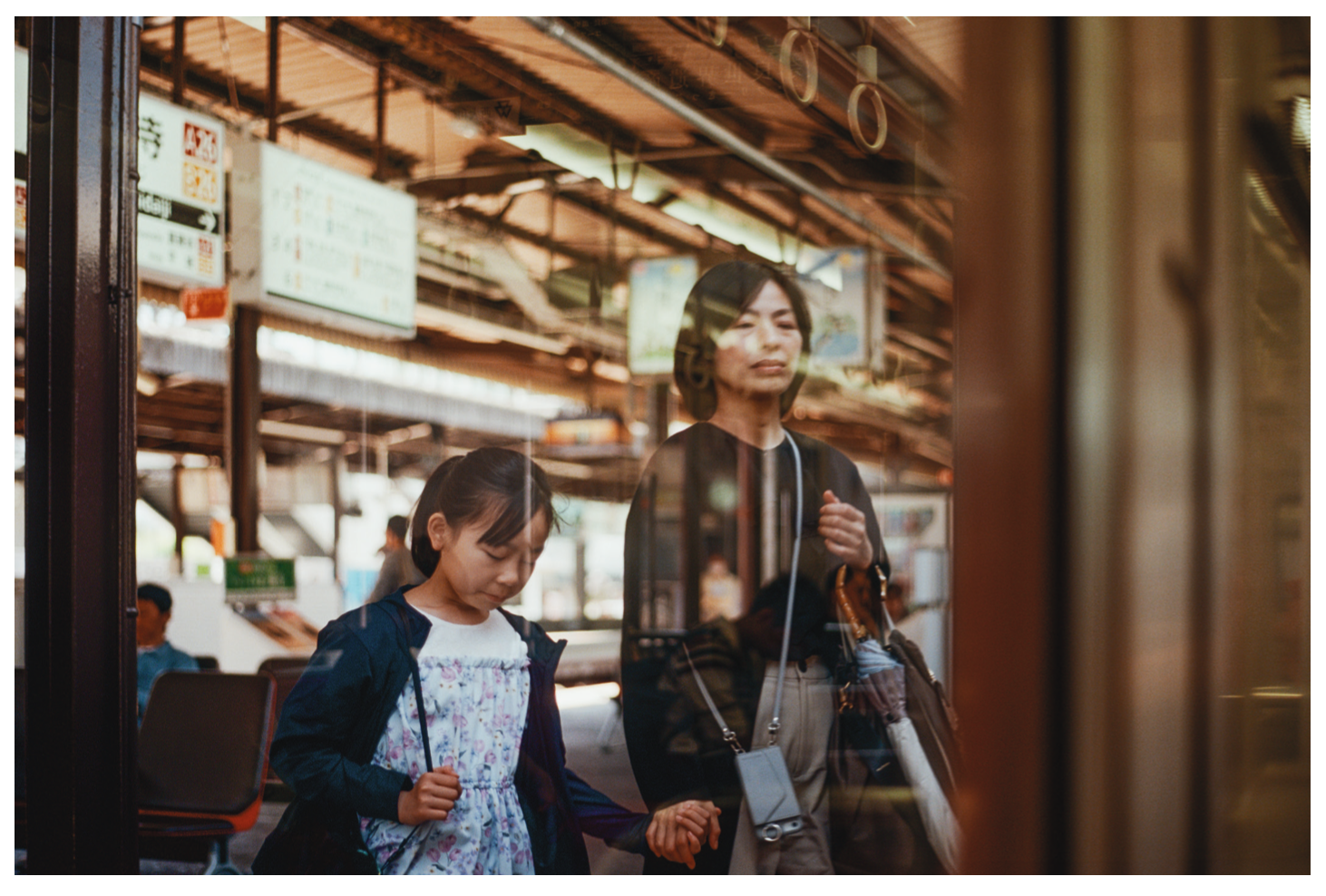
“Static” is a street photography photo book about the search for stillness in a world addicted to urgency.
In my previous project, I photographed artists as they became one with their work, inspired by my own meditative practice as a yoga teacher. Static is the natural evolution of that exploration. This book is about me becoming one with what I create. It's about practicing presence through street photography. The camera becomes an extension of my meditative state.
I aim to capture people not at their most performative, but at their most real. From moments of disconnect, moments of pause and moments of connection. Capturing moments of solitude and ritual, where the noise of daily life gives way to quiet.
It is a book of presence and mindfulness, both in the act of making the work and what it invites the viewer to experience.
This book asks the viewer to slow down, breathe, and see.
When did we stop daydreaming? We now fill every spare moment connected on our phone, visually stimulated, very rarely daydreaming.
While my practice is rooted in street photography, my photobook intentionally moves away from the ‘decisive moment’ tradition. Instead, it aims to align with ‘the indecisive moment’ a mode of seeing by stillness and being presence, by letting go of perfection.
I've been noticing how rushed life has become, we walk with our heads down, constantly on our phones scrolling, not paying attention to the world around us, constantly connected but I feel we lack real human connections.
We’ve stopped paying attention. The dappled light as it hits the ground through the gentle swaying of the trees, when was the last time we locked eyes with strangers passing by?
conclusion
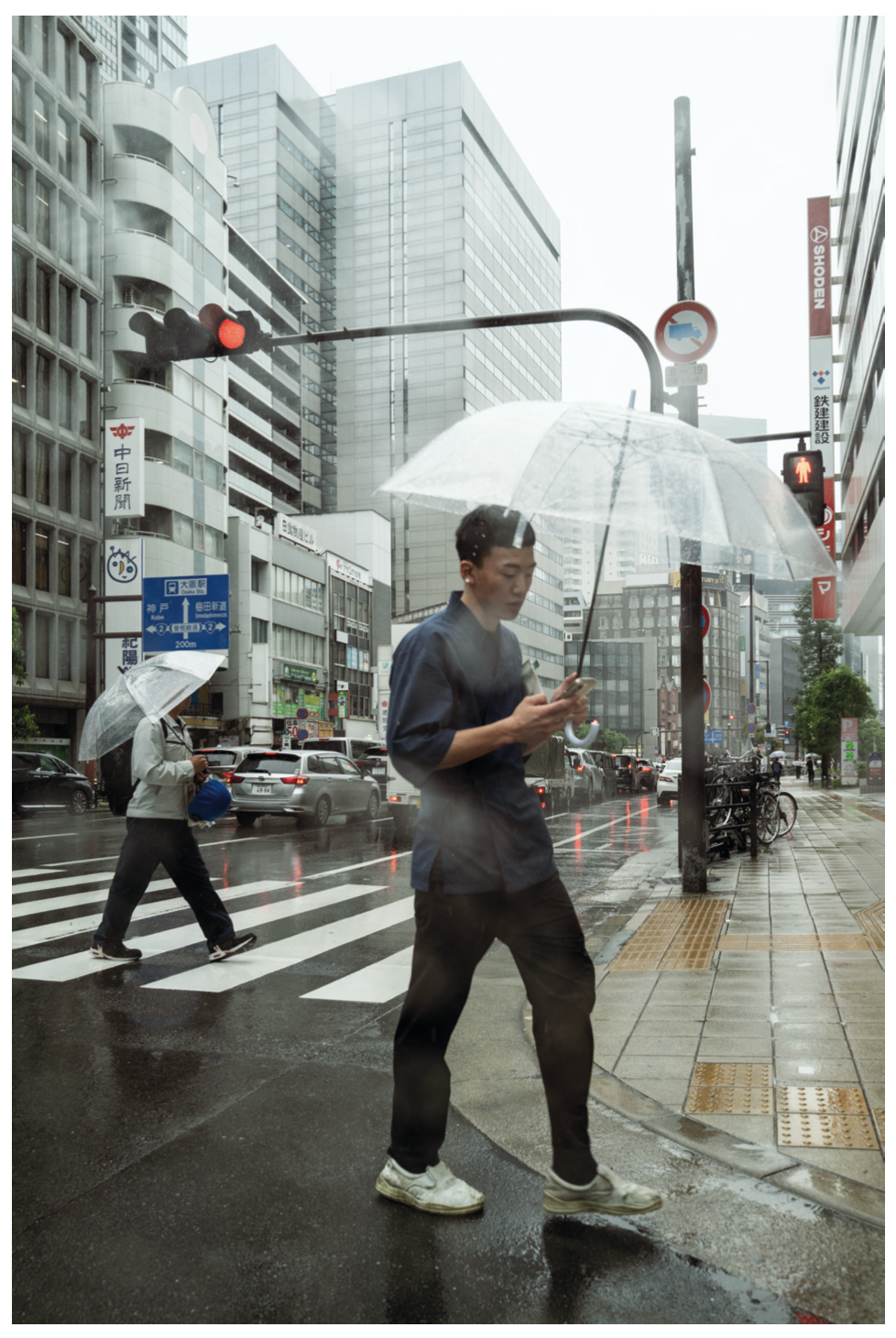
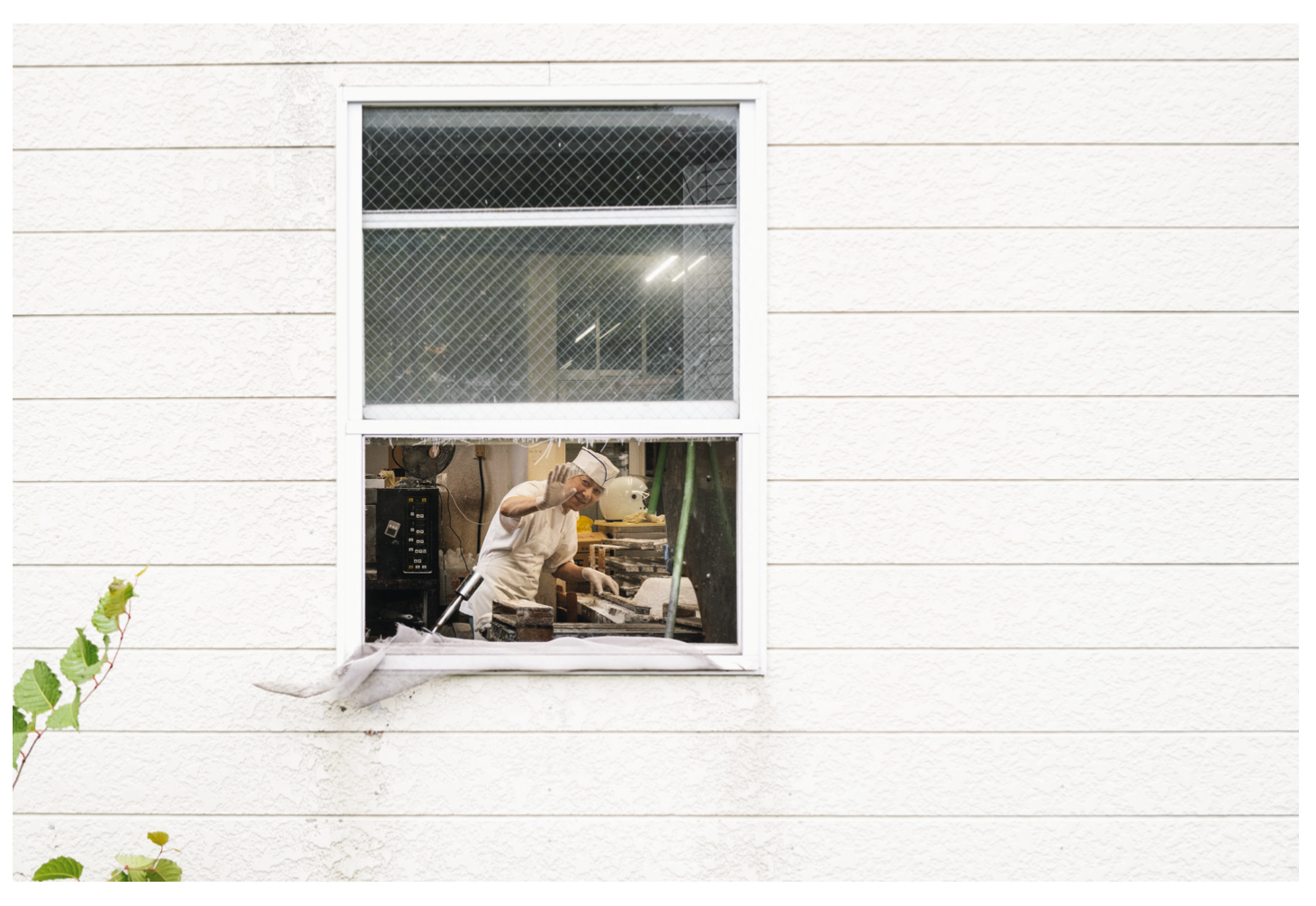
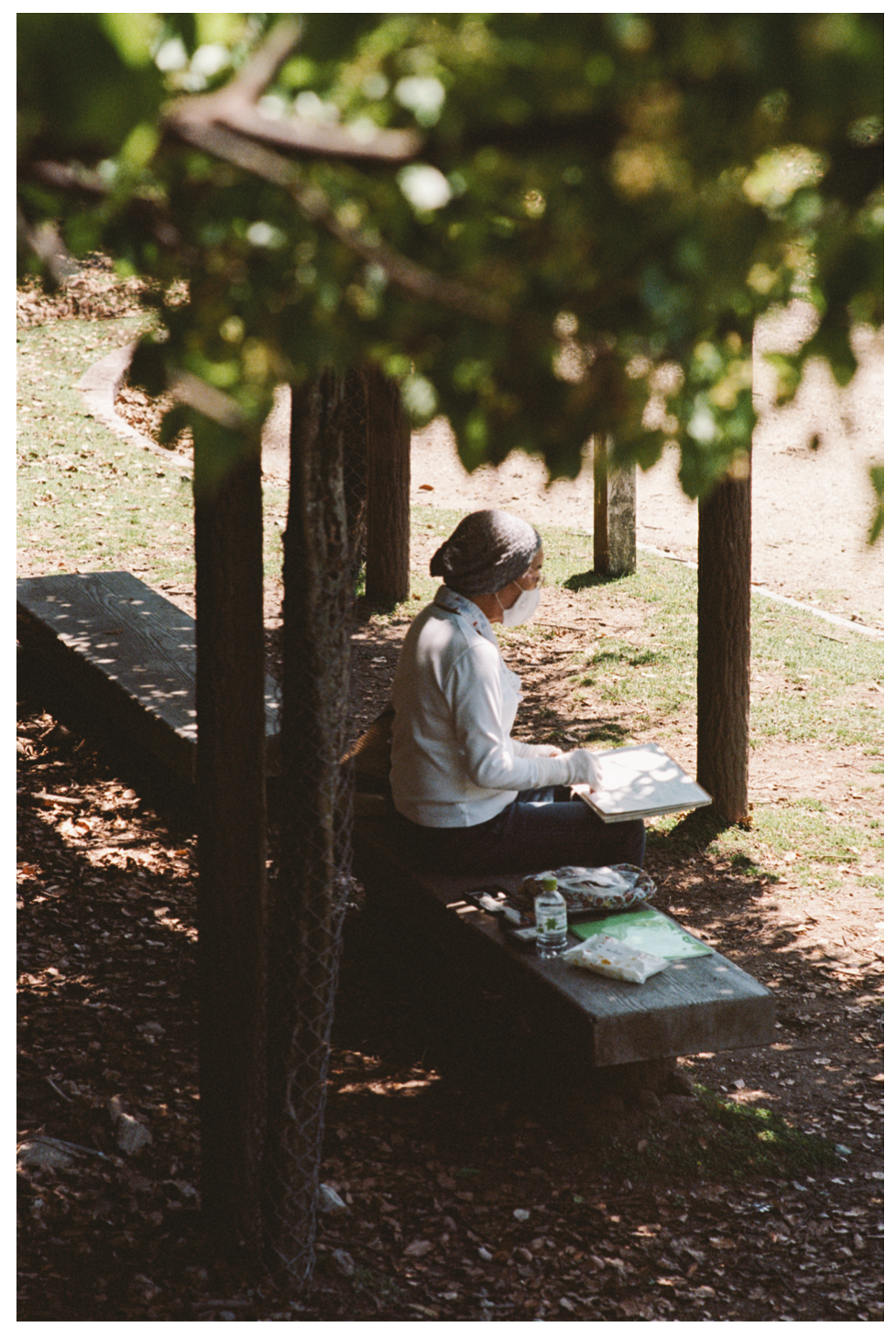
Being present is no longer a given, it has become a need we increasingly neglect. Static is an invitation to pause, to notice the quiet beneath the noise. Through these photographs, I hope viewers will recognise the pace we've grown accustomed to (this addiction to urgency) and feel gently encouraged to slow down, put their mobile phone aside and connect with their surroundings.
At its heart, this book is both a reflection and a time capsule. It documents not only fleeting human rituals, but also the emotional texture of this moment in history. In 50 years, I want people to look back and see what once was: not just how we lived, but how we moved, waited, connected and, most importantly, how we made time to simply be.
inspirations
Daido Moriyama -
What I love about Daido Moriyama is that his work doesn’t care about being clean. It’s raw, rough, chaotic, it's mostly full of grain and grit and emotion. His photos feel like memories you’re not sure you actually lived. They’re fast, blurry, imperfect and that’s exactly what makes them honest. I find that in today's photography everything feels so perfect, it almost doesn't feel reel.
Vivian Maier -
Vivian Maier’s work has probably inspired me the most. There’s something about her photographs that feels deeply personal, not just in what she saw, but in how she saw. Her images are filled with presence, with intuition, with a kind of honesty I rarely see in photography today.
William Eggleston -
William Eggleston’s photographs feel like something you walk past every day. They’re not loud or staged. Just light, colour, and life as it is. Somehow, they feel like memories, especially the cars, the signage, the everyday details of a time and place I never lived but I still feel a sense of nostalgia for. We owned an old aqua Ford Valiant back when I was a kid so these cars bring back some sort of memory for me.
That’s the magic of William Eggleston’s work. He turns the ordinary into something emotional. His use of colour feels warming. His compositions aren’t trying to be perfect, they are what they are. That simplicity has had a huge influence on how I see, especially in my personal work.
WIM WENDERS -
Wim Wenders photograph's explore what it means to be a photographer and why someone takes a photo. I particularly love the "Written in the West" series. He was out scouting locations for his film and finding inspiration. This series and also "Places" focus on the beauty of overlooked places and everyday stillness. The streets are empty, he photographs abandoned buildings, worn signs, a bar covered in dust, all these scenes capture a kind of silence.
Robert Frank -
Robert Frank is best known for The Americans, but it’s often his quieter, lesser referenced photographs that resonate most deeply with my project Static. Images like Woman smiling and smoking a cigarette, or Woman smiling at woman leaning over, show small gestures that carry the full weight of a time and place. They're not about the spectacle of America, they’re about humanity, presence, and the subtleness of everyday life.